Why Founders Feel Trapped
Owner Dependence and Decision Discipline
It's not a strategy problem.
Most founder-led companies do not have a strategy problem. They have a decision discipline problem.
The business is growing. The team is capable. Systems are in place. And yet the founder still feels stuck in the middle of everything.
That is usually not because the founder lacks intelligence, drive, or vision.
It is because the business still depends too much on the owner.
I help founder-led companies reduce owner dependence by strengthening decision discipline, so the business can run, grow, and execute without the founder at the center.

The problem is deeper than staffing, strategy, or systems
When founders feel trapped, the usual explanations are easy to reach for.
“We need better people.”
“We need better systems.”
“We need a clearer strategy.”
Sometimes those things are true. But in many growing companies, they are not the real issue.
The deeper issue is that decisions, authority, and momentum still flow back to the founder.
The company may look healthy from the outside. Revenue is up. The team is stronger than it used to be. There is a leadership team. There are systems. There are meetings. There are plans.
But under pressure, real authority still collapses back to one person.
That is owner dependence.
What owner dependence is
Owner dependence is when too much of the business still depends on the owner personally.
It shows up in obvious ways and subtle ways.
Sometimes it is visible in the calendar. The founder is in too many meetings, approves too many decisions, and gets pulled into too many day to day issues.
Sometimes it is visible in the culture. People wait. They check back. They hesitate. They know what the org chart says, but they also know where real authority still lives.
Sometimes it is visible in the founder’s body. Exhaustion. Vigilance. A constant sense that stepping away would create risk.
Owner dependence often looks like this:
important decisions stall when the owner is unavailable
decisions get made, then reopened
leaders look empowered on paper, but not under pressure
initiatives slow down unless the founder pushes them
customers, employees, or partners still rely too heavily on direct access to the owner
the business grows, but it still revolves around the founder
The founder is not just busy.
The founder is still the operating system.

Why this happens in successful companies
This is one reason the problem is so confusing.
A business can be successful and still be deeply owner dependent.
In fact, many founders build strong companies by being decisive, responsive, and willing to carry a lot. Those strengths help them grow the business. But over time, those same strengths can train the company to keep routing everything back through them.
So the founder becomes the place where uncertainty goes.
The place where conflict gets resolved.
The place where important decisions get confirmed.
The place where momentum gets restarted.
That works for a while. Then growth makes the cost of that pattern impossible to ignore.
What built the business starts to constrain it.
The real issue is decision discipline
Most founder led companies do not have a strategy problem.
They have a decision discipline problem.
That means decisions get delayed, reopened, watered down, or quietly routed back to the owner.
A founder may know what should happen.
The team may know what should happen.
The org chart may even show what should happen.
But when pressure rises, margins tighten, conflict appears, or a leader struggles, the founder steps back in and reverses the decision.
That is why I say:
Making and protecting decisions is the atomic unit of business success.
It is not enough to make a good decision once.
You have to build the structure, clarity, and discipline that protect that decision when pressure hits.
That is what allows real authority to move out of the founder and stay there.
The Decision Reversal Loop
Here is one of the most common patterns I see.
A founder hires a strong leader.
They give that person authority.
Everyone feels hopeful.
Then pressure rises. Margins dip. Results wobble. Conflict shows up.
The founder steps back in.
A decision gets reversed.
Authority crumbles.
Now the founder is back in the center, and everyone learns the same lesson all over again: real power still lives at the top.
That is the Decision Reversal Loop.
It is one of the main ways owner dependence gets reinforced in otherwise healthy companies.
This is not mainly a tactics issue. It is not mainly a systems issue. It is not mainly a knowledge issue.
It is an owner decision discipline issue.
The shift that has to happen
The structural work matters. Clear roles matter. Decision rights matter. Accountability matters.
But those changes do not hold unless something deeper changes too.
The founder has to shift from:
I am the business
to
I own the business
That sounds simple. It is not.
For many founders, the business carries identity, duty, loyalty, usefulness, pride, and love. It represents years of sacrifice and meaning. So even when the founder wants more freedom, some part of them still feels responsible for holding everything together.
That is why this work is both structural and personal.
Owner dependence only breaks when identity shifts enough for authority transfer to hold.
What decision discipline looks like in practice
Decision discipline is not theory. It is not a personality trait. It is not a motivational slogan.
It is the ongoing practice of making and protecting the decisions required to move authority, responsibility, and momentum out of the founder.
In practice, that often includes:
clear role definitions
clear decision rights
visible authority transfers
escalation rules
regular decision review
structures that make it harder to reverse course under pressure
This is why my work often starts with a simple cadence:
Problem. Decision. Question.
What problem are we trying to solve?
What decision must be made to solve it?
What question must be answered before that decision can be made and protected?
That process turns vague pressure into a real decision, and the decision into a real ownership transfer.
What becomes possible when owner dependence shrinks
When a founder strengthens decision discipline and reduces owner dependence, the business becomes less fragile and the owner gets options back.
That can look like:
faster execution
fewer decisions bottlenecking at the top
stronger leaders below the founder
more consistency
more enterprise value
lower key person risk
more freedom in the founder’s calendar and mind
greater readiness for growth, transition, or sale
This is where people often jump too quickly to strategy.
They ask, “Should I grow more aggressively?”
“Should I sell?”
“Should I step back?”
Those are important questions. But the deeper work comes first.
All three major options start from the same place:
The owner makes, and protects, the decision that the business will no longer depend on them for day to day operations.
From there, the founder may choose to grow aggressively, sell on their terms, or pursue what I call Exit Without Selling.
Exit Without Selling
Most founders think they have only two choices.
Stay stuck in the center of everything.
Or sell and walk away.
There is a third option.
You can keep the business, step out of day to day operations, retain ownership, preserve what matters, and let the company become a source of freedom rather than dependency.
That is Exit Without Selling.
But Exit Without Selling is not mainly a strategy problem.
It is a decision discipline problem.
Founders do not usually fail because they cannot imagine the future.
They fail because they do not make and protect the decisions required to build it.
Who this is for
This work is for founders who are sharp, successful, and stuck in the middle of everything.
It is also useful for professional advisors who serve business owners and keep running into the same hidden issue: the client understands what should happen, but the business still depends too much on them for it to happen.
If that sounds familiar, you are probably not dealing with just a staffing issue or a systems issue.
You are dealing with owner dependence.
For professional advisors to business owners
If you are a wealth advisor, fractional CFO, business broker, attorney, accountant, or other trusted professional advisor to business owners, this idea may help explain why some of your business owner clients remain hard to move forward.
A lot of financial problems are decision discipline problems in disguise.
A lot of transferability problems are owner dependence problems in disguise.
A lot of execution problems are not really knowledge problems. They are authority problems.
If your client’s business still depends too much on them for decisions, approvals, relationships, or momentum, that is where I am useful.
Want to explore this further?
If this resonates, a good next step is my monthly Exit Without Selling webinar.
It is for founders who want to keep the business, leave the grind, and build a company that no longer depends on them to keep everything moving.
The webinars are every first Wednesday. If the date above doesn't work, click below to select an upcoming date:

Exit planning has long focused on three gaps: the Wealth Gap, the Value Gap, and the Profit Gap. But wealth advisors know the frustration of a fourth, unnamed gap—the one where a client agrees with sound advice, sees the plan, and then simply doesn't act. The numbers don't arrive. The valuation never starts. The estate documents go unsigned. The hard conversation never happens. The plan stalls, and so does the relationship.
This interactive workshop gives professional advisors a practical lens and a usable vocabulary for the clients who won't move. You'll learn to recognize owner dependence rather than mistake it for procrastination or disinterest, to reframe stalled clients with more precision and patience, and to resource the issue without becoming the business coach yourself. The workshop draws on Dr. John Fulwider's work helping 44 founding owners get out of the center of their businesses—including eight exits completed and seven companies named to the Inc. 5000 list of fastest-growing American businesses.
At its heart is a hands-on assessment of owner dependence across four dimensions—roles, decisions, knowledge, and relationships—paired with a specific advisor "move" for each. You'll rate a real client, surface where your own planning work is most exposed to owner dependence, and leave with concrete language to use in your very next client conversation. This is a workshop, not a lecture: expect to participate, compare notes with peers, and work through a real client problem you bring with you.
The Fourth Gap is the Owner Freedom Gap—the distance between what your owner-client says they want and what their current role in the business actually allows them to decide, delegate, and do. When a founding owner is trapped in the center of everything, even your best advice becomes one more thing competing for their limited attention and decision-making capacity. The result is the Advisor Stall Loop: a recommendation made, agreement reached, action required, and then nothing. Nothing, that is, until you recognize, reframe, and resource the owner dependence behind the stall.


Business owners think they have just two choices with their business:
-
Keep grinding until you die at your desk, or
-
Sell and lose control of everything you care about
There's a third option: Keep the business, and leave the grind.
Dr. John Fulwider shows why the real challenge in doing this is not people, process, or know how, but making and protecting decisions. Participants in this fast-paced workshop will learn how owner dependence keeps them stuck, how making and protecting decisions creates freedom and growth, and how to build a business that can run without them at the center.
This is a live online workshop via Zoom.
Presenter
Dr. John Fulwider
402-202-2820
john@drivegrowthnow.com
About John: https://www.drivegrowthnow.com/about
John's LinkedIn: https://www.linkedin.com/in/johnfulwider/

Exit planning has long focused on three gaps: the Wealth Gap, the Value Gap, and the Profit Gap. But wealth advisors know the frustration of a fourth, unnamed gap—the one where a client agrees with sound advice, sees the plan, and then simply doesn't act. The numbers don't arrive. The valuation never starts. The estate documents go unsigned. The hard conversation never happens. The plan stalls, and so does the relationship.
This interactive workshop gives professional advisors a practical lens and a usable vocabulary for the clients who won't move. You'll learn to recognize owner dependence rather than mistake it for procrastination or disinterest, to reframe stalled clients with more precision and patience, and to resource the issue without becoming the business coach yourself. The workshop draws on Dr. John Fulwider's work helping 44 founding owners get out of the center of their businesses—including eight exits completed and seven companies named to the Inc. 5000 list of fastest-growing American businesses.
At its heart is a hands-on assessment of owner dependence across four dimensions—roles, decisions, knowledge, and relationships—paired with a specific advisor "move" for each. You'll rate a real client, surface where your own planning work is most exposed to owner dependence, and leave with concrete language to use in your very next client conversation. This is a workshop, not a lecture: expect to participate, compare notes with peers, and work through a real client problem you bring with you.
The Fourth Gap is the Owner Freedom Gap—the distance between what your owner-client says they want and what their current role in the business actually allows them to decide, delegate, and do. When a founding owner is trapped in the center of everything, even your best advice becomes one more thing competing for their limited attention and decision-making capacity. The result is the Advisor Stall Loop: a recommendation made, agreement reached, action required, and then nothing. Nothing, that is, until you recognize, reframe, and resource the owner dependence behind the stall.

Hi, I'm Dr. John Fulwider.
I help founding business owners reclaim their creative genius and build companies that don’t depend on them for everything.
I don’t motivate.
I don’t rescue.
And I don’t hand you generic frameworks and wish you luck.
I bring:
-
Calm, outside perspective
-
Clear thinking when everything feels tangled
-
Proven tools that turn insight into execution
-
And steady accountability while you let go—without losing control
You don’t need more pressure.
You need better structure, better decisions, and fewer things that only you can do.
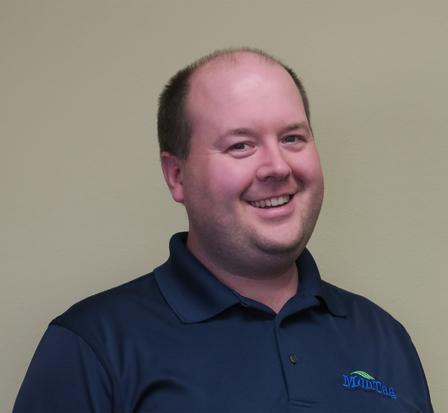
There are lots of fabulous business books. Without a coach like John it’s just a fabulous business book like all the others. You need a coach to hold you accountable.
Anthony Montag, owner, Montag Manufacturing

We are four times bigger than when we started with John.
Ted Glaser, owner, Summit Lawns

We had a lot of challenges at EyeCare Specialties. John Fulwider guided us to the right decisions to solve each challenge—the dollar investment we made looks tiny next to the growth we’ve achieved. John has a real gift for coaching strong leaders who are decisive and want to grow. Hiring him is a no-brainer.
Brian Brightman, owner, EyeCare Specialties
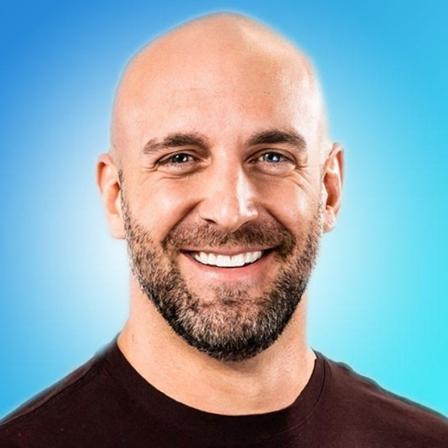
John Fulwider’s help is 33% of our success.
After a child, every minute on the business is a minute away from my kid. Every minute became valuable and that’s why I’m not afraid to spend money.
Paul Jarrett, owner, Bulu Group
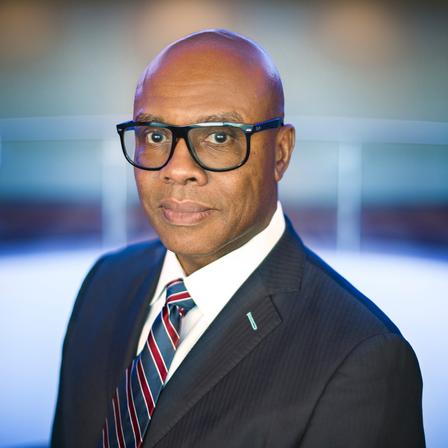
If you are in growth mode, John Fulwider is for you. Capital Cigar Lounge would not be where it is today without John Fulwider.
Tony Goins, owner, Capital Cigar Lounge and Apiary Social Club

I think you're exceptional. Just in the last six months my level of satisfaction with life has increased 70-80% and it’s a result of little changes we have made in here.
Troy Bridgford, owner, Ironhide Construction